

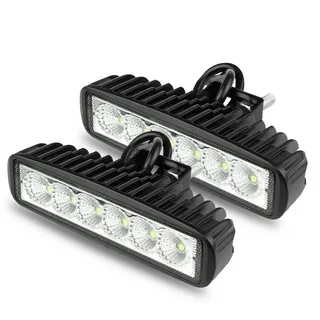
Daytime running lights (DRLs) have become a standard feature in modern vehicles. These lights are designed to make vehicles more visible during daylight hours, reducing the risk of accidents. With the introduction of LED technology, daytime running lights have seen a significant transformation in efficiency, design, and performance. Understanding these improvements can help drivers appreciate the benefits of modern lighting systems.
What Makes LED Daytime Running Lights Different from Traditional Lights?
Traditional daytime running lights often use halogen bulbs. While effective, they have limitations in brightness, energy consumption, and lifespan. LED daytime running lights, on the other hand, offer brighter illumination with less power usage. This allows vehicles to maintain visibility without placing extra strain on the battery. Additionally, LEDs have a longer lifespan compared to halogen bulbs, meaning they need fewer replacements over the life of a vehicle.
The design flexibility of LEDs is another advantage. Unlike bulky halogen lights, LEDs can be arranged in various shapes and patterns, giving modern vehicles a sleek and distinctive appearance. This flexibility also allows for adaptive lighting systems that enhance both aesthetics and functionality.
How Do LED Daytime Running Lights Improve Road Safety?
One of the key purposes of daytime running lights is to enhance safety by increasing vehicle visibility. Studies have shown that vehicles equipped with DRLs are easier for other road users to see, reducing the likelihood of collisions. LED lights, being brighter and more consistent, further improve this safety advantage. They produce a steady, uniform light that is visible from greater distances, even in bright sunlight.
LEDs also respond faster than traditional bulbs, illuminating almost instantly when the vehicle is started. This immediate activation ensures that other drivers and pedestrians are aware of the vehicle’s presence as soon as it is on the road. In situations where quick visual cues are essential, such as merging into traffic or approaching intersections, this fast response can be a critical safety feature.
What Are the Energy and Environmental Benefits of LED Daytime Running Lights?
Energy efficiency is another major improvement brought by LED technology. Traditional bulbs consume more power, which can impact fuel efficiency in smaller vehicles. LEDs use a fraction of the energy while providing the same or even better illumination. This contributes to lower fuel consumption and reduced greenhouse gas emissions over time.
From an environmental perspective, the longer lifespan of LED lights means fewer bulbs are discarded, reducing waste. Their durable construction also makes them less prone to breakage compared to glass halogen bulbs. Overall, LEDs offer a more sustainable lighting solution for modern vehicles.
How Has Vehicle Design Benefited from LED Daytime Running Lights?
Modern vehicle design has been transformed by the compact nature of LEDs. Designers now have more freedom to integrate lighting into the shape and style of the vehicle. This has led to distinctive DRL patterns that serve both functional and aesthetic purposes. LED arrays can be positioned in slim strips, curves, or intricate shapes that were impossible with traditional lighting. These designs enhance a vehicle’s modern appearance while maintaining high visibility on the road.
Conclusion
LED technology has significantly improved modern daytime running lights, offering advantages in brightness, energy efficiency, lifespan, and design flexibility. Beyond aesthetics, the safety benefits of LEDs are clear, helping vehicles stand out during daylight and reducing the risk of accidents. Drivers also benefit from lower energy consumption and longer-lasting lighting systems. As vehicle technology continues to evolve, LED daytime running lights remain an essential feature that combines safety, efficiency, and style.