
Choosing the right door components is essential for creating a space that looks attractive and functions smoothly. Hinges may appear to be small fittings, but they play a major role in supporting door weight, controlling movement, and maintaining proper alignment. From residential interiors to commercial buildings, selecting suitable hinges can improve everyday convenience, durability, and the overall appearance of a door.
Understanding the different types of architectural door hinges helps homeowners, builders, architects, and contractors make informed decisions. Factors such as door material, weight, opening direction, frequency of use, and interior design should all be considered before choosing a suitable option.
What Are Architectural Door Hinges?
Door hinges are mechanical fittings that connect a door to its frame and allow it to open and close. They support the door while enabling controlled movement and helping it remain correctly positioned within the doorway.
Different hinges are designed for different applications. Lightweight interior doors may require standard hinges, while heavy timber doors, glass installations, and commercial entrances may need specialised fittings.
The right hinge should provide sufficient load-bearing capacity, suit the door’s construction, and work with the surrounding frame. Choosing suitable products also helps reduce unnecessary strain on the door and supporting hardware.
Which Types of Door Hinges Are Available?
Understanding common hinge designs makes it easier to identify the most appropriate option for a particular installation.
Butt Hinges
Butt hinges are among the most widely used options for residential and commercial doors. They generally consist of two leaves connected by a central pin, allowing the door to swing open and closed.
These hinges are commonly installed on timber and compatible metal doors. They are available in different sizes, materials, finishes, and load ratings to accommodate various requirements.
When selecting butt hinges, consider the door’s dimensions, weight, and expected usage. Correct positioning and secure fixing are important for smooth operation.
Concealed Hinges
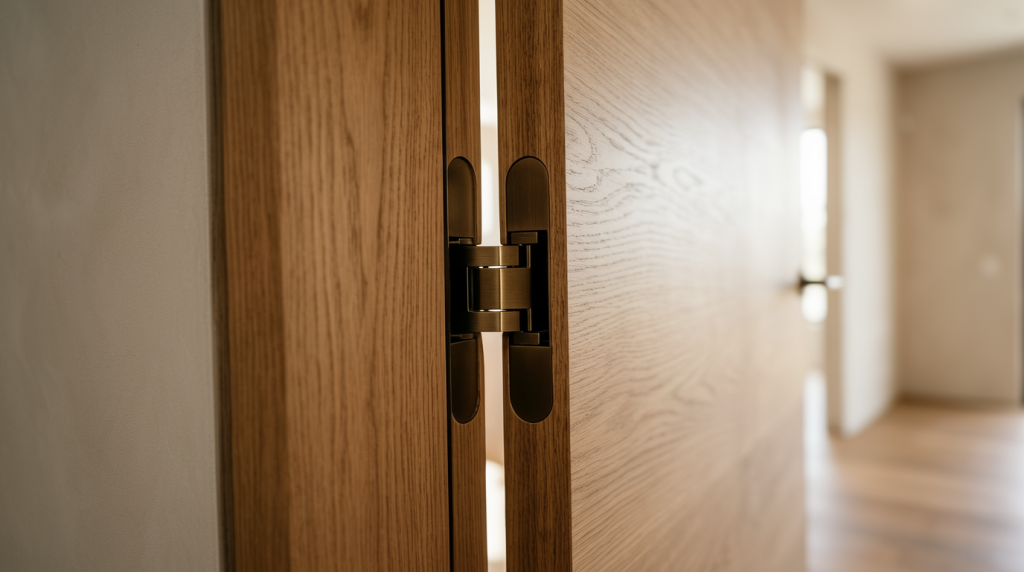
Concealed hinges remain hidden when the door is closed, creating a clean and minimalist appearance. They are often used in modern interiors, contemporary cabinetry, and selected flush-door applications.
Some concealed hinge systems provide adjustment features that help installers align the door accurately. However, the required hinge type depends on the door design, thickness, and installation method.
These fittings are particularly useful where visible hardware would interrupt the intended appearance of the space.
Pivot Hinges
Pivot hinges allow a door to rotate around pivot points positioned near its top and bottom rather than relying solely on conventional side-mounted hinges.
They are used in selected contemporary entrances, oversized doors, and architectural installations where a distinctive opening movement is desired.
Before choosing pivot hardware, check the door’s weight, dimensions, pivot location, and structural support requirements. Professional installation may be necessary for larger or heavier doors.
Spring Hinges
Spring hinges use a spring mechanism to help a door return towards its closed position after opening. They can be useful in certain commercial, utility, and residential applications.
The spring strength and closing action should suit the door’s size and intended use. Where a door requires controlled closing for safety or accessibility, the complete installation should meet the applicable requirements.
Ball-Bearing Hinges
Ball-bearing hinges contain bearings that reduce friction between moving components. They are often suitable for heavier doors or entrances that experience frequent use.
Their construction can support smoother movement and help manage wear when the hinges are correctly selected and installed.
For busy commercial environments, checking the manufacturer’s load ratings and suitability for repeated operation is particularly important.
How Do You Choose the Right Door Hinges?
Selecting a suitable hinge involves more than comparing prices or finishes. Several practical considerations affect performance and long-term reliability.
Consider Door Weight and Size
The hinge must support the door’s weight without causing sagging or alignment problems. Larger and heavier doors may require hinges with greater load capacity or a different hinge arrangement.
Always follow the manufacturer’s guidance regarding the number of hinges, spacing, fixing requirements, and maximum supported weight.
Check the Door Material
Timber, metal, composite, and glass doors have different installation requirements. A hinge designed for one material may not be appropriate for another.
Glass doors, for example, often require specialised clamps or fittings designed to support the glass safely without damaging it.
Match the Hinge to the Frame
The door frame must provide suitable support for the selected hardware. Weak fixings, unsuitable frame materials, or incorrect hinge positioning can affect the door’s movement.
Before installation, check the frame condition and ensure that the hinges are compatible with both the door and the surrounding structure.
Think About Usage Frequency
Doors in offices, shops, schools, and other busy buildings may be opened and closed many times throughout the day. Such locations often benefit from hinges designed for frequent operation.
For bedrooms, cupboards, and other low-traffic areas, different specifications may be appropriate.
Choose a Suitable Finish
Hinge finishes influence both appearance and maintenance. Stainless steel, satin finishes, polished finishes, matte black, and other decorative options can complement different interior styles.
Choose a finish that coordinates with door handles, locks, and other fittings. For outdoor or moisture-prone areas, check the material’s corrosion resistance and suitability for the environment.
Why Is Proper Door Hinge Installation Important?
Correct installation helps a door operate smoothly and remain aligned over time. Even high-quality hinges may perform poorly when they are incorrectly positioned or attached using unsuitable fixings.
Installers should ensure that hinge locations are measured accurately and that the door is properly supported during fitting. Screws must be appropriate for the door and frame materials, while the hinge leaves should sit correctly within their intended positions.
Poor installation may lead to rubbing, squeaking, uneven gaps, loose screws, or difficulty closing the door. Heavy doors and specialised hinge systems may require professional installation to ensure suitable support and safe operation.
It is also important to check that the finished door does not obstruct walkways or interfere with nearby fixtures.
How Can You Maintain Door Hinges?
Regular maintenance can help preserve smooth movement and identify problems before they become more serious.
Start by inspecting hinges for loose screws, visible damage, corrosion, and signs of misalignment. Tighten suitable fixings when necessary, taking care not to overtighten them or damage the surrounding material.
If a hinge begins to squeak, use a lubricant recommended by the manufacturer. Clean away dust and debris that may affect movement, and avoid products that could damage the finish.
Check for changes in the gaps around the door or increased resistance when opening and closing it. These symptoms may indicate loose hardware, a shifting frame, or other underlying issues.
Damaged hinges should be assessed and replaced when necessary. For heavy doors, avoid removing load-bearing hinges without properly supporting the door.
Where Can You Find Suitable Architectural Door Hinges?
Choosing the right supplier involves reviewing product specifications, material quality, available finishes, and compatibility with the intended installation. Buyers should look for clear information about load capacity, dimensions, fixing methods, and maintenance requirements.
When comparing architectural door hinges, consider whether the selected products meet the functional and visual needs of the project. Residential renovations may prioritise appearance and ease of use, while commercial installations may require additional attention to durability and repeated operation.
It is also helpful to consider the availability of matching hardware and replacement components. Coordinated finishes across hinges, handles, locks, and other fittings can create a consistent appearance throughout a building.
For specialised doors or demanding installations, consult a qualified supplier or installer who can recommend appropriate products based on the door’s construction and intended use.
Conclusion
Door hinges are essential components that influence how a door moves, how well it stays aligned, and how effectively it complements the surrounding design. Choosing suitable hinges requires careful consideration of door weight, material, frame construction, usage frequency, and finish.
By selecting appropriate products, ensuring correct installation, and carrying out regular maintenance, property owners and building professionals can support reliable door performance over time. Whether the project involves a residential renovation or a commercial development, informed hinge selection helps create doors that combine practical functionality with a clean, coordinated appearance.