
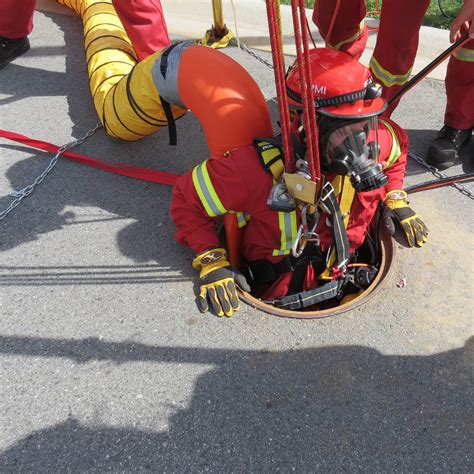
Emergency planning for high-risk work should address more than how an incident might be prevented. It should also consider what happens if controls fail and a worker requires assistance.
Standby rescue provides a planned rescue capability for work where an emergency may require a rapid, specialised response. Depending on the task, this can involve having appropriately trained personnel, rescue equipment and procedures ready before work begins rather than attempting to organise a response after an incident has occurred.
Rescue Planning Starts Before Work Begins
A rescue plan should reflect the actual hazards of the task and work environment.
Before work starts, relevant risks may need to be assessed alongside questions such as:
- How could a worker become trapped or incapacitated?
- How will rescuers reach the person?
- What equipment could be required?
- Are suitable access and retrieval points available?
- How will communication be maintained?
- What happens if normal access becomes unavailable?
- How will external emergency services be contacted if required?
These considerations can help determine the personnel, equipment and procedures required for an effective response.
Where Standby Rescue May Be Required
Rescue arrangements can be relevant across a range of industrial, construction and maintenance activities.
Confined-space work is one important example. Tanks, pits, vessels, sewers and other enclosed or partially enclosed environments can present hazards that make an improvised rescue extremely dangerous.
Working at height can also require specific rescue planning. A worker suspended after a fall, for example, may need to be recovered from a position that cannot be reached safely using ordinary site access.
Other high-risk environments may present different rescue challenges, making task-specific planning essential.
A Rescue Team Needs More Than Equipment
Having ropes, harnesses, retrieval devices or first-aid equipment on site does not by itself create an effective rescue capability.
Personnel need to understand how the equipment is used and how the planned rescue procedure should be carried out. Roles should be clearly defined so that people know who raises the alarm, coordinates the response, performs the rescue and communicates with other parties.
Training and practical exercises can also reveal problems that may not be obvious from a written procedure.
Why Improvised Rescue Can Create Additional Risk
When a colleague is in danger, the natural response may be to enter the area immediately and attempt to help. In hazardous environments, this can expose additional people to the same conditions that caused the original emergency.
Confined spaces are a clear example. Entering an unsafe space without appropriate controls, equipment and training can result in rescuers also becoming casualties.
A properly prepared standby rescue arrangement is intended to replace an improvised response with a planned one based on identified hazards and defined procedures.
Equipment Must Match the Rescue Scenario
Rescue equipment should be selected according to the task rather than relying on a standard collection of gear for every site.
Depending on the circumstances, equipment may include:
- Harnesses and appropriate rope systems
- Retrieval or hauling equipment
- Communication devices
- Suitable respiratory equipment where required
- First-aid equipment
- Lighting
- Equipment for managing access and egress
All equipment should be suitable for its intended purpose and maintained appropriately.
Communication Is Part of Rescue Readiness
A rescue response can become significantly more difficult when communication fails.
Workers, standby personnel and site supervisors need a reliable way to raise an alarm and exchange information. The chosen method should account for the environment, particularly where noise, distance or restricted spaces can affect ordinary communication.
Plans should also establish how external emergency services will be contacted and how responders can access the work area if additional assistance is necessary.
Rescue Procedures Should Be Tested
A rescue procedure that works on paper may reveal practical limitations when tested.
Drills can help identify issues involving equipment setup, access, communication, response roles or the time required to reach a worker. They also give personnel an opportunity to practise their responsibilities before dealing with a real emergency.
The frequency and nature of these exercises should reflect the work being performed and the risks involved.
Building Rescue Capability Into High-Risk Work
Standby rescue should be considered as part of the overall risk-management process rather than an isolated emergency measure. Effective arrangements depend on competent personnel, suitable equipment, clear communication and a rescue procedure designed around the actual work environment.
Planning these elements before high-risk work begins can provide a more structured response if an emergency occurs.
Frequently Asked Questions
What is standby rescue?
It is a planned rescue capability in which appropriately prepared personnel and equipment are available to respond to foreseeable emergencies associated with particular work activities.
Is standby rescue only used for confined spaces?
No. Confined-space work is one application, but rescue planning may also be required for work at height and other high-risk environments.
Why should rescue procedures be practised?
Practical exercises can test whether the planned procedure, personnel, equipment and communication arrangements will work effectively under site conditions.
Can emergency services replace an on-site rescue plan?
Emergency services may form part of the broader response, but workplaces should not assume that external responders alone address every foreseeable rescue requirement. Emergency arrangements should be based on the specific risks and applicable workplace requirements.





0 Comments