by Tony | Aug 6, 2026 | Central Heating Service
Post Views: 73
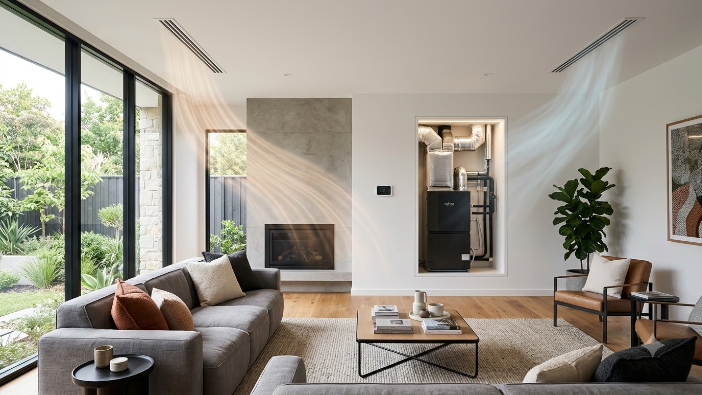
Maintaining a comfortable indoor environment throughout the year starts with choosing a system that suits your property’s needs. Comfort heating and cooling across Mont Albert offers practical climate control solutions for both residential and commercial spaces, helping to maintain pleasant indoor temperatures during every season. Whether you’re upgrading an older system or installing one for the first time, selecting the right solution can improve comfort, efficiency, and everyday convenience.
Creating a Comfortable Indoor Environment
Every property has different heating and cooling requirements depending on its size, layout, insulation, and occupancy. Modern systems are available in a variety of configurations, allowing homeowners and businesses to choose a solution that matches their daily needs. A well-planned installation helps provide balanced temperature control while supporting efficient operation throughout the year.
Features That Support Everyday Living
Modern comfort heating and cooling near Mont Albert systems include practical features designed to improve indoor comfort and system performance.
- Heating and cooling from a single system
- Energy-efficient operation
- Consistent temperature throughout the property
- Quiet day-to-day performance
- Smart controls for convenient operation
- Options suitable for homes and commercial spaces
Getting the Best from Your System
Keeping a heating and cooling system in good condition involves more than simply turning it on when required. Regular servicing allows components to be inspected, cleaned, and tested to help maintain reliable performance. Preventative maintenance can also identify developing issues early, helping reduce the likelihood of unexpected breakdowns and supporting efficient operation throughout the year.
Planning for Long-Term Performance
When selecting a heating and cooling solution, it is worth considering factors such as energy efficiency, property size, room layout, and future requirements. Choosing a system that aligns with these factors can improve overall performance while helping create a more comfortable and functional indoor environment.
A Practical Choice for Every Season
Choosing comfort heating and cooling in Mont Albert is a practical way to maintain consistent indoor comfort all year round. With a system tailored to your property’s requirements and supported by regular maintenance, you can enjoy dependable heating, effective cooling, and reliable performance season after season.
by Tony | Jul 27, 2026 | Central Heating Service
Post Views: 77
The way Australian homes are heated is changing. Rising gas prices, increasing environmental awareness, and the rapid improvement of heat pump technology have combined to create a genuine shift in how homeowners think about their heating systems. For those currently relying on a gas boiler to power their hydronic heating, the question of whether to replace gas boiler with heat pump is becoming harder to ignore — and for many properties, the answer is increasingly straightforward.
Why More Homeowners Are Making the Switch
Gas boilers have served Australian homes well for decades, but the economics and environmental case for continuing with gas are weakening. Wholesale gas prices have risen significantly across eastern Australia in recent years, and those increases flow directly into household energy bills over a long heating season.
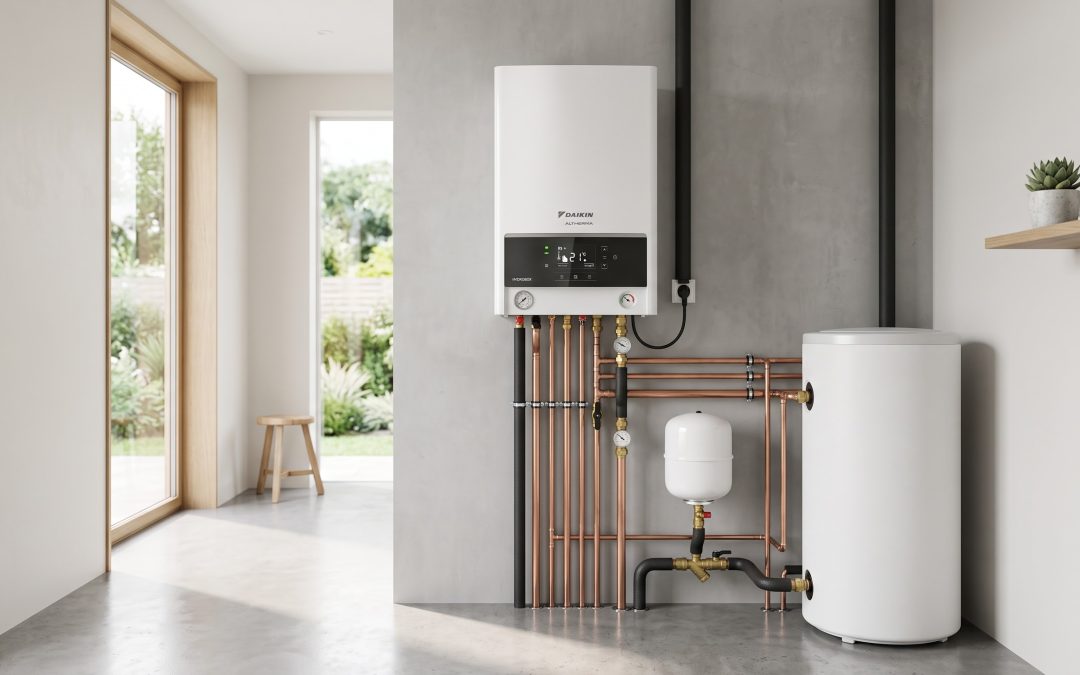
Heat pump boilers draw thermal energy from the outside air and use electricity to transfer that energy into the hydronic water circuit. Because they move heat rather than generate it, they operate at efficiencies that gas boilers simply cannot match. A modern heat pump boiler can deliver three to four units of heat for every single unit of electricity consumed — a level of efficiency that translates into meaningful savings on running costs across a full winter season.
For homeowners with rooftop solar panels, the case becomes even stronger. Operating a heat pump boiler during daylight hours allows solar-generated electricity to power the heating system directly, reducing or even eliminating the operating cost on sunny winter days.
Key Benefits of Replacing a Gas Boiler With a Heat Pump
Homeowners who have made the switch consistently report the following advantages:
- Lower energy bills as the efficiency of heat pump technology reduces the energy consumed per unit of heat delivered compared to even a high-efficiency gas condensing boiler.
- No ongoing gas supply costs as removing gas from the equation eliminates the daily supply charge that gas network operators levy regardless of how much gas is actually consumed.
- Reduced carbon footprint as heat pump boilers produce no direct emissions at the point of use, and their environmental impact decreases further as the electricity grid continues transitioning toward renewable sources.
- A single energy source for the whole home making household energy management simpler and creating a clear pathway toward full electrification over time.
- Eligibility for government rebates as various state and federal incentive programmes in Australia currently support the replacement of gas appliances with efficient electric alternatives, reducing the upfront cost of the transition.
What to Consider Before Making the Switch
A gas boiler replacement is a significant decision that benefits from careful assessment before any work begins. The most important factors to evaluate include:
- System flow temperature compatibility as heat pump boilers operate most efficiently at lower flow temperatures, which suits underfloor hydronic systems well but may require radiator upgrades in older systems designed for higher temperature operation.
- Electrical supply capacity as heat pump boilers require a dedicated circuit and in some cases a three-phase power supply, making an electrical assessment an essential early step in the planning process.
- Hot water requirements as many heat pump boiler models integrate domestic hot water heating alongside space heating, which can simplify the overall system and reduce equipment costs.
- Installer experience as a successful installation requires a qualified plumber and electrician with specific knowledge of both hydronic systems and heat pump technology working together from design through to commissioning.
Is Every Home Suitable for the Switch?
Heat pump boilers are suitable for the vast majority of existing hydronic heating systems, but a site-specific assessment is always the recommended starting point. Homes with underfloor hydronic systems are particularly well matched to heat pump technology, as underfloor systems are designed to operate at the lower flow temperatures where heat pumps perform at their most efficient.
Homes with older panel radiator systems designed for higher operating temperatures may require some radiator upgrades or resizing to achieve optimal performance from a heat pump boiler. A qualified specialist will assess the existing system, calculate the heat load requirements of the property, and advise on whether any modifications are needed before the new boiler is installed.
Final Thoughts
The decision to replace gas boiler with heat pump is one that makes increasing financial and environmental sense for Australian homeowners with hydronic heating systems. The technology is proven, the efficiency advantages are real, and the long-term trajectory of gas prices and grid electricity continues to favour making the switch sooner rather than later. Engage a qualified hydronic and heat pump specialist, have the existing system properly assessed, and make the transition with confidence in both the outcome and the long-term value it delivers.
by Tony | Jul 7, 2026 | Central Heating Service, Home Improvement
Post Views: 152
On a dry Melbourne summer afternoon, an evaporative cooler working properly makes a genuine difference to how liveable a home feels. When it stops performing — blowing warm air, leaking water, or refusing to start — the discomfort is immediate. Understanding the most common causes of failure and what evaporative cooling repair involves helps homeowners make faster decisions and get the system back up and running with less frustration.
How Evaporative Coolers Work and Why That Matters for Repairs
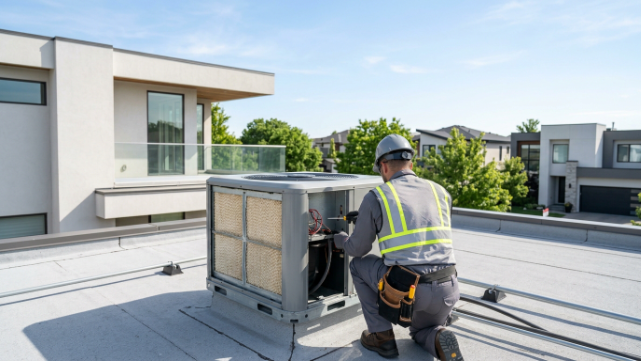
Unlike refrigerative systems that compress and cycle refrigerant, evaporative coolers work by drawing warm outside air through water-saturated pads. As the air passes through the wet pads, the evaporation process drops the air temperature before the fan distributes it through the home. The simplicity of this mechanism is part of what makes evaporative systems cost-effective to run — but it also means the pads, pump, water distribution system, and fan are all critical to performance and all subject to wear.
Most evaporative cooling faults trace back to one of these components, and identifying which one is the starting point for any repair.
Signs the System Needs Attention
Some issues are obvious and others are subtle until the system stops working entirely. Common indicators that an evaporative cooler needs professional attention include:
- Warm or barely cooled air coming through the vents despite the system running
- Water leaking from the unit onto the roof or into the ceiling space
- The pump running but no water reaching the pads
- The fan operating normally but the cooling pads visibly dry during operation
- Unusual noise from the fan motor or a grinding sensation during startup
- The unit failing to start despite power being present at the isolator
- Musty or stale smells in the distributed airflow indicating pad contamination
What Repair Work Typically Covers
Evaporative cooling repair varies considerably in scope depending on the nature of the fault. Pad replacement is one of the most routine tasks — cooling pads deteriorate over time as mineral deposits from the water supply accumulate and reduce their effectiveness. A pump that has seized or lost prime is another common repair that restores water flow to the pads and brings cooling performance back quickly.
Float valve faults cause the unit to either overflow continuously or fail to maintain the water level in the base tray — both of which affect performance and can cause water damage if left unaddressed. Fan belt wear or motor issues on older belt-driven units produce noise and reduced airflow that progressively worsen without intervention.
More involved repairs include water distribution manifold replacement, motor overhaul or replacement, and addressing corrosion in the unit’s tray or housing that develops over years of water exposure in areas with hard water supply.
Repair vs Replacement: Knowing the Difference
For units more than ten to fifteen years old showing multiple faults simultaneously, the question of whether repair remains the right approach is worth raising with the attending technician. A system that has had repeated repairs across successive seasons may be approaching the point where replacement delivers better long-term value than continuing to address individual components as they fail.
A good technician will give an honest assessment of the unit’s overall condition rather than recommending expensive repairs on a system that is unlikely to deliver reliable service for much longer regardless of the work done.
Staying Ahead of Next Summer
The best time to identify whether an evaporative cooler needs repair is not when summer has already arrived and the unit is needed immediately. A pre-season inspection and service in spring — checking the pads, pump, float valve, motor, and water distribution system before they are put under load — gives the opportunity to address developing faults before they become urgent. For homeowners who rely on evaporative cooling repair to get through a reactive breakdown each year, shifting to a proactive service approach is what finally breaks that cycle.

by Tony | May 29, 2023 | Central Heating Service, Heating & cooling Services
Post Views: 63
The way we heat our homes is changing, and for good reason. Rising energy costs and a growing awareness of household emissions have pushed many Australian homeowners toward solutions that deliver comfort without the ongoing expense of traditional gas systems. A hydronic heat pump system sits right at the intersection of those two priorities — combining the even, radiant comfort of hydronic heating with the energy efficiency of heat pump technology to produce one of the most effective whole-home heating solutions available today.
How a Hydronic Heat Pump System Works
At its core, a heat pump doesn’t generate heat the way a boiler does. Instead, it extracts thermal energy from the outside air — even on cold days — and transfers that energy into water circulating through the hydronic system. This process is remarkably efficient because moving heat from one place to another requires far less energy than creating it from scratch through combustion.
The heated water then travels through insulated pipework to underfloor tubing, radiators, or panel heaters throughout the home, releasing warmth evenly into each space. The heat pump continues to cycle, maintaining the water at the right temperature to keep the system running at its target output without the temperature spikes and drops associated with forced air heating.
Why Efficiency Numbers Matter Here
Heat pumps are measured by their Coefficient of Performance, commonly referred to as COP. A COP of 3, for example, means the system delivers three units of heating energy for every one unit of electrical energy it consumes. Modern air-to-water heat pumps used in hydronic systems can achieve COPs well above 3 under typical operating conditions, making them significantly more efficient than direct electric heating and competitive with or better than gas in many scenarios.
The efficiency of the system is also influenced by the temperature at which the water in the hydronic circuit operates. Heat pumps perform best when producing water at lower temperatures — typically between 35°C and 55°C — which aligns naturally with underfloor hydronic systems that are designed to operate in that range. This is one reason why the combination of a heat pump with an underfloor hydronic circuit is considered particularly well-matched from an efficiency standpoint.
Advantages Over Gas Boiler Systems
Gas boilers have been the traditional heat source for hydronic systems in Australia for many years, and they remain a reliable option. However, the shift toward electrification and the improving performance of heat pump technology has changed the comparison considerably. Key advantages of a hydronic heat pump system over a gas alternative include:
- No gas connection required — suitable for homes not connected to the gas network or in areas where gas supply is being phased out
- Lower running costs when paired with solar panels, since the heat pump can run largely on self-generated electricity during daylight hours
- Reduced emissions compared to gas combustion, particularly as the electricity grid continues to shift toward renewable sources
- Eligibility for government incentives that may apply to heat pump installations under current energy efficiency programmes
- Reverse cycle capability on some models, allowing the same system to provide cooling in summer by reversing the refrigerant cycle
Is It Suitable for All Homes?
A hydronic heat pump system is a strong fit for many building types, but it works best when certain conditions are in place. New builds and major renovations offer the ideal opportunity to design the hydronic circuit and building insulation together, maximising the system’s performance from day one. Existing homes can also benefit, particularly if there’s already a hydronic system in place that can be retrofitted with a heat pump as the heat source.
Homes with good insulation and draught sealing get the most out of a low-temperature hydronic system because the building retains heat effectively and the heat pump doesn’t need to work as hard to maintain comfort. In less well-insulated homes, a heat load assessment by a qualified specialist will clarify whether the system can meet the heating demand and what upgrades to the building envelope might improve the outcome.
Pairing With Solar: A Natural Combination
One of the most compelling arguments for a hydronic heat pump system in the current energy landscape is how naturally it pairs with rooftop solar. Heat pumps run on electricity, and solar panels generate electricity during the hours when daytime heating demand is often at its highest, particularly in autumn and spring. Programming the system to run more actively during solar generation hours and storing that warmth in the thermal mass of the floor or the building itself can meaningfully reduce the amount of grid electricity the system draws, lowering running costs further.
Battery storage adds another layer to this, allowing solar-generated electricity to power the heat pump into the evening when heating demand typically peaks in colder months.
What to Expect From Installation
Installing a hydronic heat pump system is not a simple swap. The heat pump unit itself is typically installed outdoors, similar in footprint to a ducted air conditioning condenser, and connected to the existing or new hydronic pipework via a buffer tank or hydraulic separator that stabilises the water circuit. Controls need to be configured to manage the heat pump’s operating range correctly, and the hydronic circuit needs to be balanced to ensure even heat distribution across all zones.
Working with specialists who have experience with both heat pump technology and hydronic system design is important here, since the two elements need to be matched carefully to deliver the efficiency and comfort the system is capable of producing.
The Long View
Energy costs aren’t going down, and the case for efficient, low-emission heating solutions is only getting stronger. A hydronic heat pump system represents a meaningful step toward lower running costs, reduced reliance on gas, and a more comfortable home environment — all without sacrificing the gentle, consistent warmth that makes hydronic heating such a well-regarded choice among Australian homeowners who’ve experienced it firsthand.

Recent Comments