
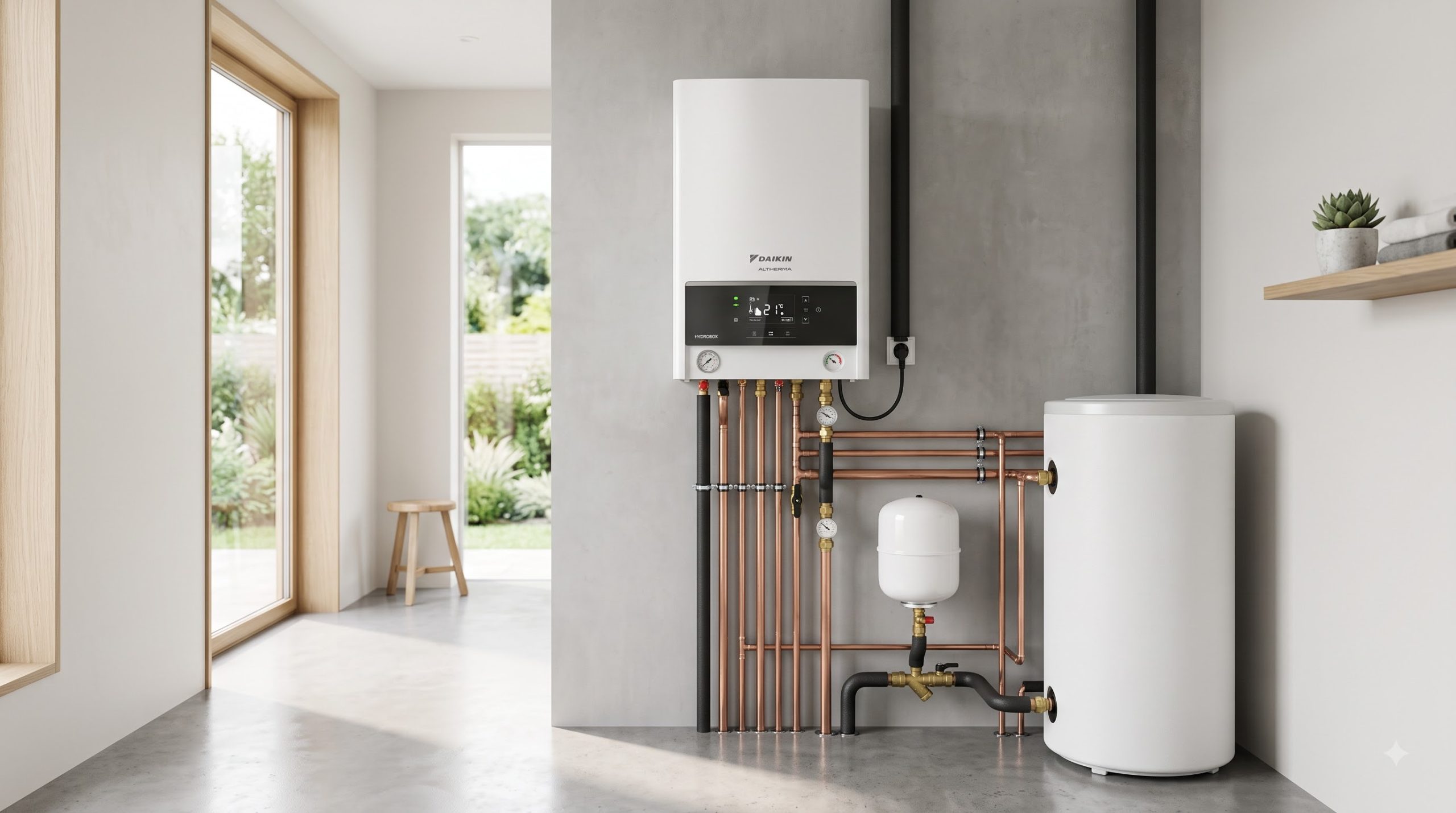
The way Australian homes are heated is changing. Rising gas prices, increasing environmental awareness, and the rapid improvement of heat pump technology have combined to create a genuine shift in how homeowners think about their heating systems. For those currently relying on a gas boiler to power their hydronic heating, the question of whether to replace gas boiler with heat pump is becoming harder to ignore — and for many properties, the answer is increasingly straightforward.
Why More Homeowners Are Making the Switch
Gas boilers have served Australian homes well for decades, but the economics and environmental case for continuing with gas are weakening. Wholesale gas prices have risen significantly across eastern Australia in recent years, and those increases flow directly into household energy bills over a long heating season.
Heat pump boilers draw thermal energy from the outside air and use electricity to transfer that energy into the hydronic water circuit. Because they move heat rather than generate it, they operate at efficiencies that gas boilers simply cannot match. A modern heat pump boiler can deliver three to four units of heat for every single unit of electricity consumed — a level of efficiency that translates into meaningful savings on running costs across a full winter season.
For homeowners with rooftop solar panels, the case becomes even stronger. Operating a heat pump boiler during daylight hours allows solar-generated electricity to power the heating system directly, reducing or even eliminating the operating cost on sunny winter days.
Key Benefits of Replacing a Gas Boiler With a Heat Pump
Homeowners who have made the switch consistently report the following advantages:
- Lower energy bills as the efficiency of heat pump technology reduces the energy consumed per unit of heat delivered compared to even a high-efficiency gas condensing boiler.
- No ongoing gas supply costs as removing gas from the equation eliminates the daily supply charge that gas network operators levy regardless of how much gas is actually consumed.
- Reduced carbon footprint as heat pump boilers produce no direct emissions at the point of use, and their environmental impact decreases further as the electricity grid continues transitioning toward renewable sources.
- A single energy source for the whole home making household energy management simpler and creating a clear pathway toward full electrification over time.
- Eligibility for government rebates as various state and federal incentive programmes in Australia currently support the replacement of gas appliances with efficient electric alternatives, reducing the upfront cost of the transition.
What to Consider Before Making the Switch
A gas boiler replacement is a significant decision that benefits from careful assessment before any work begins. The most important factors to evaluate include:
- System flow temperature compatibility as heat pump boilers operate most efficiently at lower flow temperatures, which suits underfloor hydronic systems well but may require radiator upgrades in older systems designed for higher temperature operation.
- Electrical supply capacity as heat pump boilers require a dedicated circuit and in some cases a three-phase power supply, making an electrical assessment an essential early step in the planning process.
- Hot water requirements as many heat pump boiler models integrate domestic hot water heating alongside space heating, which can simplify the overall system and reduce equipment costs.
- Installer experience as a successful installation requires a qualified plumber and electrician with specific knowledge of both hydronic systems and heat pump technology working together from design through to commissioning.
Is Every Home Suitable for the Switch?
Heat pump boilers are suitable for the vast majority of existing hydronic heating systems, but a site-specific assessment is always the recommended starting point. Homes with underfloor hydronic systems are particularly well matched to heat pump technology, as underfloor systems are designed to operate at the lower flow temperatures where heat pumps perform at their most efficient.
Homes with older panel radiator systems designed for higher operating temperatures may require some radiator upgrades or resizing to achieve optimal performance from a heat pump boiler. A qualified specialist will assess the existing system, calculate the heat load requirements of the property, and advise on whether any modifications are needed before the new boiler is installed.
Final Thoughts
The decision to replace gas boiler with heat pump is one that makes increasing financial and environmental sense for Australian homeowners with hydronic heating systems. The technology is proven, the efficiency advantages are real, and the long-term trajectory of gas prices and grid electricity continues to favour making the switch sooner rather than later. Engage a qualified hydronic and heat pump specialist, have the existing system properly assessed, and make the transition with confidence in both the outcome and the long-term value it delivers.



0 Comments