
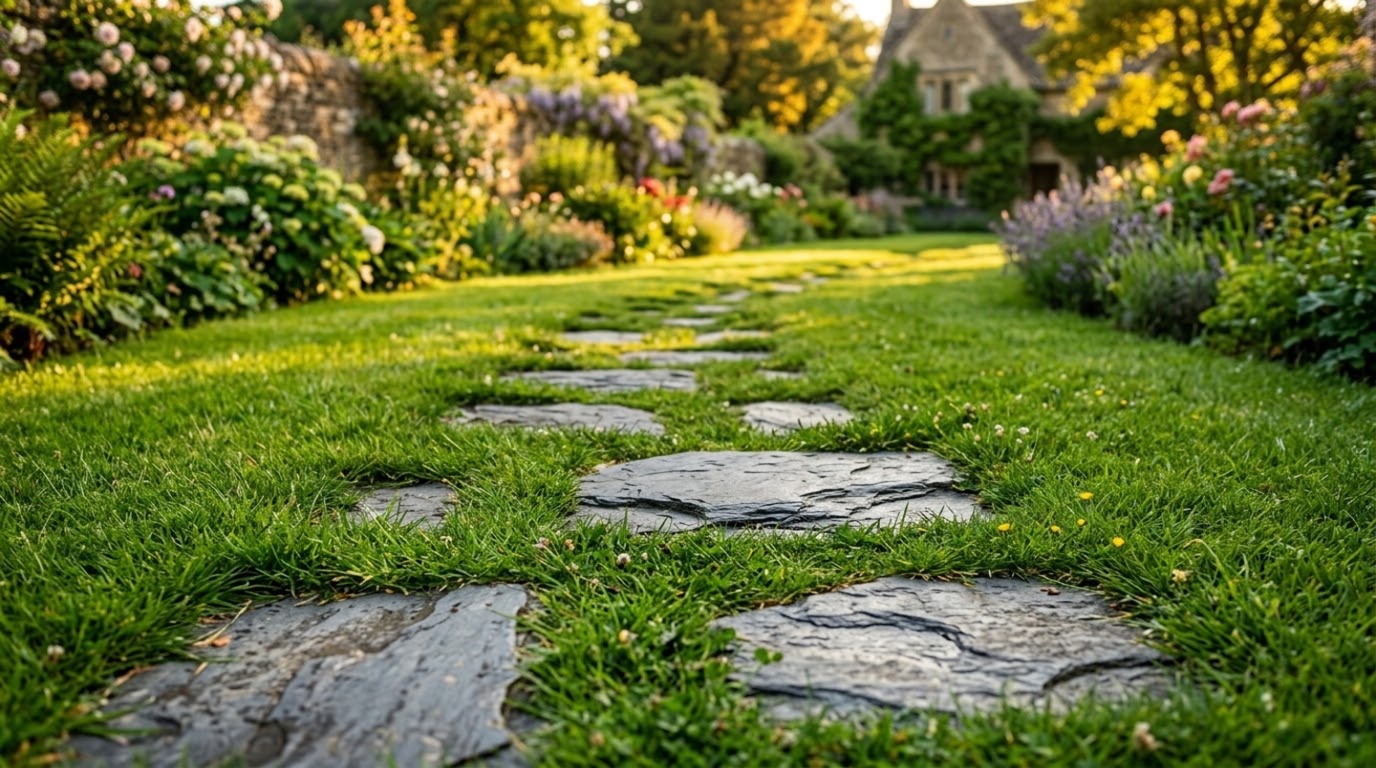
A well-designed garden should be both attractive and practical. Pathways help connect different areas of an outdoor space while making it easier to move between gardens, patios, entrances, and entertaining areas. Carefully selected stepping stones can create a simple pathway while adding texture and visual interest to the landscape.
What Are Stepping Stones?
Stepping stones are individual paving pieces placed along a garden path or outdoor area. They can be made from natural stone, concrete, sandstone, limestone, or other durable materials. Their size, shape, colour, and texture can vary depending on the desired appearance and application.
Unlike a continuous paved pathway, individual stones can create a more relaxed and natural look. They can also be arranged with spaces between each piece to complement surrounding grass, gravel, mulch, or garden beds.
Where Can Stepping Stones Be Used?
Outdoor stepping stones can be used in many areas around a property. They are commonly installed across lawns, through garden beds, beside swimming pools, between outdoor entertaining areas, and along pathways leading to sheds or other features.
They can also provide a visual connection between separate outdoor zones. For example, a pathway can guide visitors from a patio to a garden seating area without requiring the entire space to be paved.
How Do You Choose the Right Material?
The material should suit both the design and practical requirements of the area. Natural stone can provide variations in colour and texture, helping create an organic appearance. Concrete options may offer consistent shapes and finishes for more structured landscaping designs.
Consider the surrounding elements before choosing a material. Existing paving, retaining walls, fencing, plants, outdoor furniture, and building finishes can all influence the best colour and texture.
The surface should also provide suitable grip, particularly in areas that may become wet. A qualified landscaper or paving professional can help determine whether a particular material is appropriate for the intended location.
How Should Stepping Stones Be Positioned?
Correct positioning is important for both appearance and usability. Stones should generally be placed at comfortable walking distances from one another, allowing people to move naturally along the pathway.
The surrounding ground should also be prepared properly. A stable, level base can help reduce movement and uneven surfaces over time. Depending on the installation method and ground conditions, additional preparation may be required before placing the stones.
For a natural garden appearance, stones can follow gentle curves rather than forming a perfectly straight line. For contemporary landscapes, evenly spaced stones may create a cleaner and more structured effect.
Can Stepping Stones Improve Garden Design?
Stepping stones can become more than a functional pathway. Their shape, arrangement, and material can contribute to the overall landscape design.
Large stones can create a strong visual feature, while smaller pieces may blend into planting areas. Combining stone with low-growing plants, decorative gravel, mulch, or lawn can create contrast between hard and soft landscaping elements.
Lighting can also enhance a pathway after dark. Low-level garden lights positioned near the route can improve visibility while highlighting the texture and layout of the landscape.
What Maintenance Is Required?
Maintenance depends on the selected material and surrounding environment. Regular sweeping can remove leaves, soil, and other debris. Weeds may need to be removed from gaps between stones, particularly where organic material collects.
Occasional cleaning can help preserve the appearance of the surface. The appropriate cleaning method should depend on the material, as some stones may require specific care products or techniques.
Conclusion
Outdoor stepping stones can create practical garden pathways while adding character and structure to an outdoor space. Choosing suitable materials, preparing the ground correctly, and planning the spacing can contribute to a safer and more attractive result. With thoughtful placement and regular maintenance, a stepping-stone pathway can complement gardens, lawns, patios, and other landscape features for years to come.





0 Comments